The Filter You Don't Know You're Wearing
Most traders who journal think the hard part is done once they sort the data. The pattern showed up. The conditions clustered. Case closed.
Your journal review has a filter on it. You bring expectations to the data before you open the file. If you believe your problem is entries, you scan entry data. If you believe your problem is overtrading, you count trade frequency. The conditions you find are shaped by what you already think is wrong.
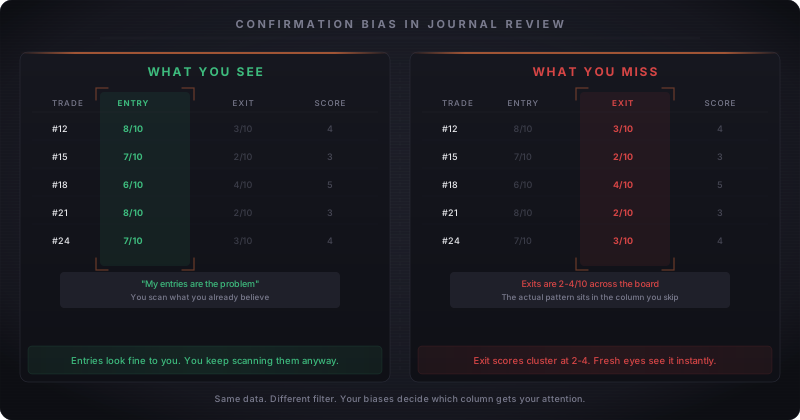
I spent months convinced my problem was entries. Every time I opened my journal, I looked at setups, entry timing, whether I was trading with or against the trend. The exit column? Never touched it. Why would I? I already knew the issue was getting in at the wrong spot.
When someone else finally looked at the same data, they found the opposite. My entries were fine. The damage came from exits: cutting winners early, moving stops on losers, holding through levels I said I'd respect. That pattern was sitting in a column I never sorted by. Ask me how I know that confirmation bias isn't just a textbook concept.
The wrong model sounds like this: "I review my journal every week, so I know my patterns." It seems right because you ARE finding patterns. The data IS there. You sort, you cluster, you see recurring conditions. But the patterns you find are the ones your assumptions let through. Regular review is necessary, but reviewing with the same assumptions every week confirms those assumptions every week. The pattern you need might live in a field you've never filtered. That's the blind spot.
When Last Week Rewrites Your Career
You have 60 entries in your journal. The last 5 were losses. When you sit down to analyze your data, which trades occupy the most mental space?
The five losses. Every time.
Recency bias makes recent events feel disproportionately significant. Five bad trades this week don't erase 55 entries across three months. But they feel like they do, because the emotional weight of recent experience drowns out the statistical weight of the larger sample.
In 'What Your Journal Is Actually Telling You' (Lesson 2), you sorted by execution score to find your bottom 10. That exercise protects against recency bias because it pulls from the entire dataset, not just this week. But the bias sneaks back in when you interpret the patterns. You see your bottom 10, notice that 3 happened this week, and conclude "this week is the problem" instead of examining the 7 entries scattered across previous months.
We have months of data and draw conclusions from days. The math doesn't care about last Tuesday.
The Wins You Remember, the Losses You Blur
Think about the last 10 trades you can recall without looking at your journal. How many were winners?
Most traders I ask remember 6 to 8 winners out of 10. When they check the journal, the actual ratio is closer to 50/50. We remember wins more vividly because we replayed them, told someone about them, or used them as evidence that our strategy works. The losses blur into a vague sense of "I had some red days" without the same specificity.
That's survivorship bias applied to your own performance. You build your self-image as a trader from a highlight reel, not the full dataset.
The disposition effect makes this worse. When you document trades, you write more about wins and less about losses. The winning trade gets a full paragraph: "Entered at VWAP, added at the retest, hit my 2:1 target." The losing trade gets "Stopped out." Two words. That asymmetry in documentation makes half your journal detailed and the other half empty.
Fresh Eyes
The fix isn't trying harder to be objective. That's like searching your house for lost keys while insisting they're in the kitchen. You check every drawer, every counter, every shelf. When you don't find them, you check the kitchen again. Your partner walks in and finds them on the nightstand in 30 seconds. They weren't smarter. They just didn't start with a theory about where the keys were.
Two structural techniques cut through the bias.
Sort by the column you avoid. Whatever dimension you never examine, sort by it. If you always analyze by setup quality, sort by time of day. Emotional state your default filter? Try previous trade outcome. Always checking entries? Sort by exits. The column you skip is probably hiding the pattern, because your existing beliefs haven't pre-filtered that data yet. I learned this the expensive way.
Get a second reader. Hand your bottom 10 entries to someone with no theory about what's wrong with your trading. A trading partner, a mentor, anyone who can look at the same rows without the filter of your self-narrative. They don't need to be a better trader. They just need to see the data without preconceptions.
The gap between what you found and what the second reader found is your blind spot. Name it. Write it on the same index card from Lesson 2, right below your pre-mistake conditions.
Key Rules
- Sort your journal by at least 2 different columns each review session. Your default sort confirms existing beliefs. The second sort challenges them.
- Never draw conclusions from fewer than 30 entries. Five trades feel significant. Thirty reveal actual patterns.
- Sort by at least 1 column you've never examined each review session. Whatever data field you've never filtered by is where your blind spot lives. If you always check entries, sort by exits.
- Get a second reader every 30 trading sessions. Someone with no theory about your weaknesses. Their first impression of your data is unfiltered.
- Name your blind spot in writing. After every fresh-eyes review, write one sentence: "My primary blind spot is ____." Pin it next to your pre-mistake conditions from Lesson 2.
- Separate data collection from data interpretation by at least 4 hours. Journal during or right after trading. Analyze later that evening or the next day. The emotional residue from the session biases same-day review.
Now that you can spot the biases filtering your own journal review, the next lesson examines why your best trading days create your worst ones, because the overconfidence that follows a green streak is one of the hardest biases to catch in real time.