What Are Micro E-Mini Futures?
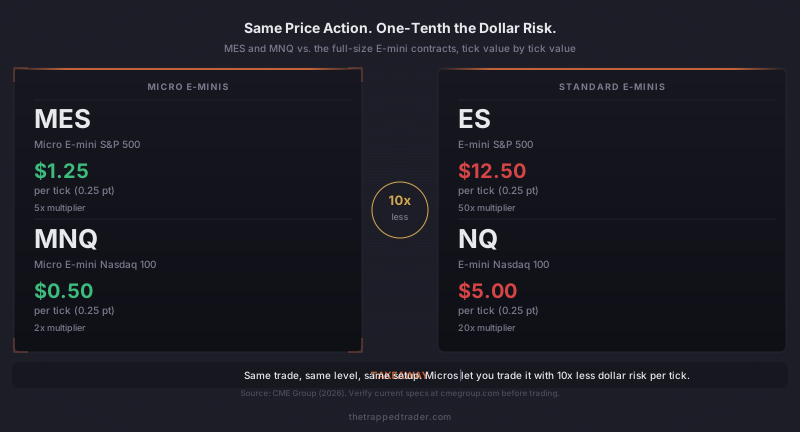
Micro E-mini futures are contracts sized at 1/10th of their standard E-mini counterparts. The Micro E-mini S&P 500 (MES) tracks the same index as the full ES contract, moves tick for tick with the same price action, and trades alongside the same participants in the same market. The only practical difference is the dollar value per tick.
With ES, each 0.25-point tick is worth $12.50. With MES, that same tick is worth $1.25. Same move, one-tenth the dollar impact. The NQ comparison is similar: NQ pays $5.00 per tick, MNQ pays $0.50.
CME Group launched micro E-mini futures in May 2019. As of December 2024, more than 3 billion micro E-mini contracts had traded since launch, and in 2025 they were averaging over 4 million contracts per day, accounting for more than 45% of all equity index average daily volume on CME.
Trading hours run Sunday 5:00 PM CT through Friday 4:00 PM CT, with a daily maintenance break from 4:00 to 5:00 PM CT. Same schedule as the standard E-mini contracts. You're in the same market, just with a smaller position.
CME also offers micro contracts on the Dow Jones Industrial Average (MYM) and the Russell 2000 (M2K). Both are worth knowing about. For most traders starting in futures, though, the first instrument decision comes down to MES vs. MNQ, because that's where the liquidity and the price action learning curve are most useful.
MES vs. MNQ: Which Contract Should You Trade?
Both are solid starting points, but they have meaningfully different personalities. You'll want to match yours to the market before you pick one.
MES (Micro E-mini S&P 500) tracks the S&P 500. It tends to trend more smoothly with less intraday volatility than the Nasdaq. The broader index means no single sector or mega-cap name dominates the price action. If you're coming from stocks and want something that rewards patience and trend-following, MES is where I'd point you first. For a deeper look at the underlying indices and how their personalities differ, this guide to ES vs. NQ futures covers the comparison in full.
MNQ (Micro E-mini Nasdaq 100) tracks the Nasdaq 100, which is tech-heavy and volatile. Intraday ranges can run twice what MES moves in the same session. More volatility means more opportunity, and it also means wider stops and faster P&L swings. MNQ rewards traders who understand tech-driven price action. For beginners, it can feel chaotic.
| MES | MNQ | |
|---|---|---|
| Underlying index | S&P 500 | Nasdaq 100 |
| Multiplier | 5x | 2x |
| Tick value | $1.25 per tick | $0.50 per tick |
| Full point value | $5.00 | $2.00 |
| Typical intraday range | Lower | Higher |
| Best fit | Trend-following, patience | Volatility, tech-driven moves |
My default recommendation: start with MES. If you find the pace dull after 3 to 4 months of consistent journaling and review, look at whether your setups actually perform better on NQ. Documented evidence matters here. Boredom is not a valid reason to switch instruments.
How Much Capital Do You Actually Need?
You'll see accounts opened for $500 or even less. Those are technically possible. They're also traps.
The exchange minimum intraday margin for MES trading is roughly $40 to $50 per contract (check CME Group directly for current figures, as these change). That number covers holding the position during the session, not trading with any real margin for error. A single losing day with two average-sized moves can wipe out a $500 account before you've had time to evaluate what went wrong.
A realistic starting point is $2,000 to $5,000. That range lets you absorb a string of losses without hitting zero, gives you room to follow the position sizing principles that actually matter without betting maximum risk on every trade, and still produces meaningful feedback about whether your execution is improving.
Futures also carry an advantage stocks don't. The PDT rule (Pattern Day Trader restriction) requires a $25,000 minimum for active day trading in equities and options. Futures are regulated by the CFTC and NFA, not FINRA. The PDT rule doesn't apply. You can take 10 trades in a day on a $3,000 account and no one flags it.
There's a tax angle worth knowing too. Futures contracts under Section 1256 receive 60/40 treatment: 60% of gains taxed at the long-term capital gains rate, 40% at short-term. At the highest federal bracket, the blended rate works out to approximately 26.8%, versus 37% for short-term ordinary income on stocks. The actual benefit depends on your marginal rate, so lower-bracket traders see proportionally less difference, but the 60/40 treatment applies regardless of bracket.
Talk to a tax professional before making decisions based on these figures. It's a real structural advantage, and one that's easy to overlook if you've only traded stocks.
The Psychology of Starting Small
The hardest part of starting with micros isn't the mechanics. It's the ego.
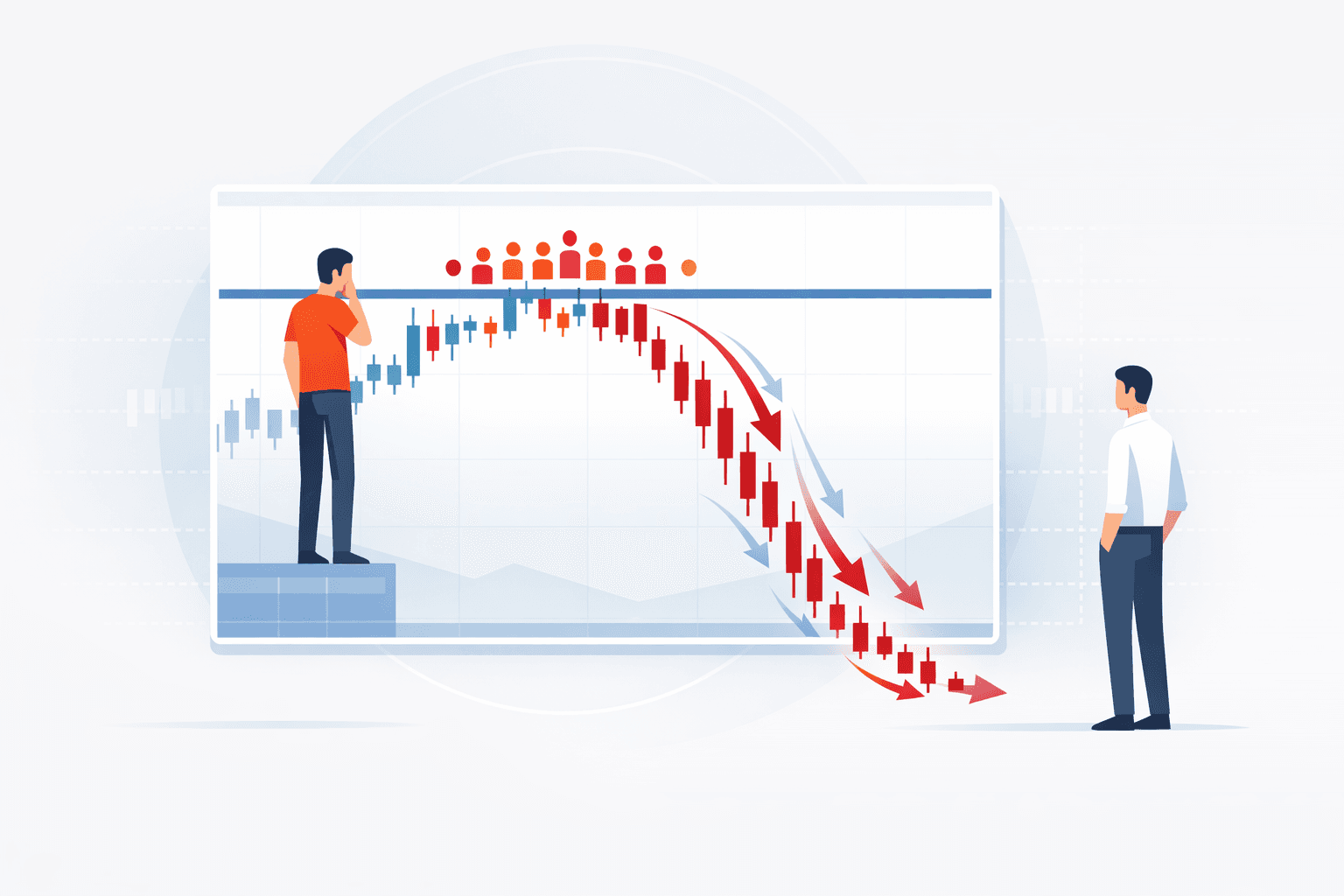
The pattern repeats constantly. Someone with real market knowledge, some experience, and a legitimate edge skips the small contract because it doesn't feel serious. They go straight to full-size. They might even win for a few days. Then the inevitable losing stretch arrives, and the dollar amounts are real enough to trigger exactly the emotional responses that were still manageable on smaller size. A 10-point stop on ES costs $125. On MES, the same stop costs $12.50. The setup is identical. The lesson is identical. The only difference is whether you can afford to keep learning after three losing days in a row.
I skipped micros entirely when I started trading futures. Went straight to full-size contracts because I thought I was ready. I wasn't. Across close to 800 funded account attempts and over $100K in evaluation fees, the lesson kept repeating: the traders who survive the learning curve are the ones who keep the dollar exposure low enough to actually learn from their mistakes instead of being destroyed by them.
The discipline that seemed solid at $50 per tick evaporates at $500 per tick. The emotional circuitry fires differently when the stakes change, and that response is biological, not a character flaw. You can't willpower your way past it. You have to train through it at a size where the consequences are survivable.
The Pre-Execution Protocol exists for exactly this reason. Check your size, check your stop, check your bias before every trade. Those three checks matter on a micro contract, and they matter even more when size goes up. The only way to build that habit without emotional interference is to practice it when the dollar consequences are tolerable. Micros are where the habit gets formed.
The gap between sim and live trading doesn't prepare you for what live P&L does to your decision-making. Live P&L at micro scale produces real emotional responses at a cost where you can still learn from them. The psychology work that separates consistent traders from everyone else starts with experiencing live market pressure, not simulating it.
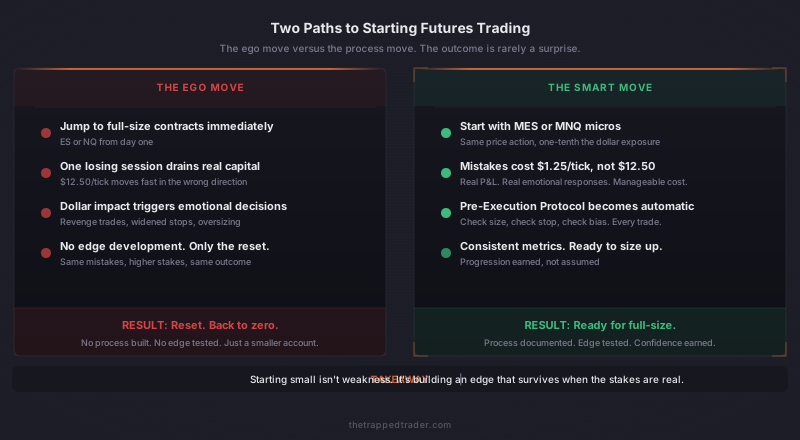
Build the process on micros first. When you size up, the execution is already automatic because you've done the reps at a cost you could absorb. The contract changes. The discipline doesn't have to.
Micro Futures and Prop Firm Evaluations
If you're pursuing funded capital through a prop firm, micro futures deserve serious consideration during your evaluation phase.
Most major firms, including Apex, Topstep, and Tradeify, allow micro E-mini contracts during evaluations (verify current rules directly on each firm's website before signing up). The appeal is straightforward: with smaller positions, you stay within daily drawdown limits more easily. Exceeding the daily loss limit is how traders typically fail evaluations. Not because they're unprofitable over time, but because one bad session on full-size contracts blows past the firm's maximum daily loss and ends the evaluation immediately.
The Drawdown Protocol is built for exactly this situation: hit 50% of your daily risk limit and cut size in half for the rest of the session. Hit 100% and you're done for the day, screen off, walk away. On MNQ instead of NQ, that 100% threshold takes twice as many adverse ticks to reach. That margin for error can be the difference between completing an evaluation and buying another one.
Prop firm rules, fees, and profit splits change constantly. Before signing up for any evaluation, verify current terms directly on the firm's website. What was accurate last quarter may not be accurate now.
From Micros to Minis: The Progression Path
Micro E-mini futures are the starting point, not the destination. Knowing when to step up matters as much as knowing where to start.
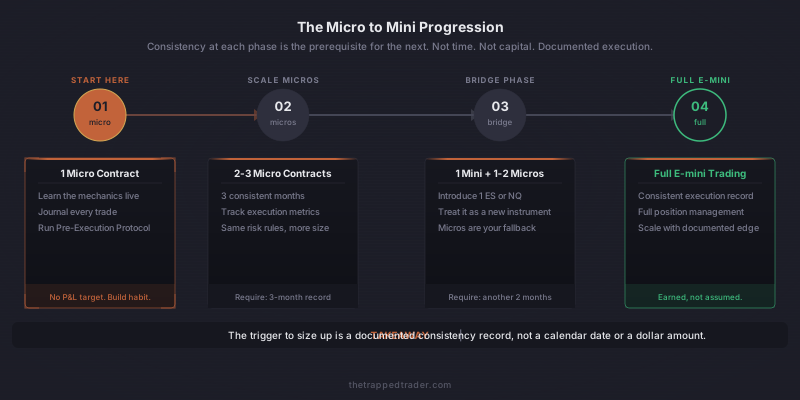
The trigger for sizing up shouldn't be a dollar amount in your account. It shouldn't be a specific number of months. The trigger is documented consistency: a meaningful sample of trades, across varied market conditions, where your process held and your results tracked your edge.
A practical minimum before considering a size increase: 3 consecutive months of positive or near-positive performance with consistent execution metrics in your journal. Not 3 lucky months. Three months where you can point to specific trades, specific decisions, and explain why each one reflected your plan, win or lose.
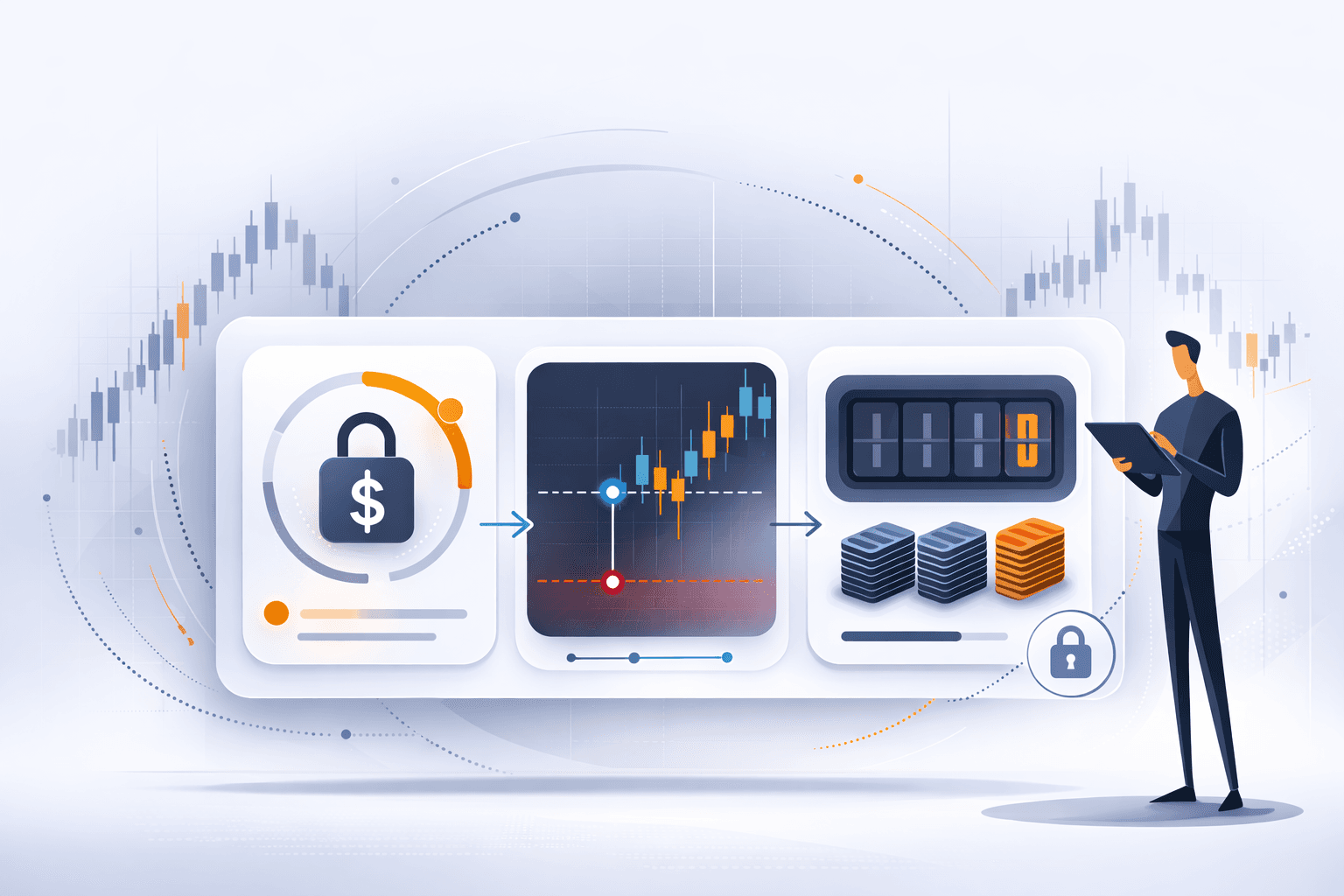
Tracking those metrics and knowing when to size up is where UpSkalr comes in for me. I built it because I kept trying to manage the micro-to-mini progression in spreadsheets and failing. UpSkalr's sizing and growth algorithm takes your account balance, win rate, and execution data and calculates exactly when you're ready to add contracts, what size to trade at each step, and how to scale from 1 MES to 2, then to a mini, then to full E-mini. It removes the guesswork from the progression entirely. The math tells you when you're ready. Not your ego.
Be honest with yourself about this progression, though. Some traders stay on micros for years and trade profitably at that scale. There's nothing wrong with that. The goal is consistent execution, not a bigger contract. Sizing up before your process is genuinely automatic is how traders who were doing well on micros blow up on minis. I've done it. The urge to "graduate" from micros is usually ego, not evidence. If your data doesn't clearly show you're ready, you're not ready. We'll go deep on that full transition in the Level 2 instrument training curriculum.