What OHLC Actually Means
Each candle records four data points:
- Open: the first price traded when the period started
- High: the highest price reached during the period
- Low: the lowest price reached during the period
- Close: the last price traded when the period ended
Think of each candle as a round in a boxing match. The open is where the round starts. The high is the furthest buyers pushed. The low is the furthest sellers pushed. The close is who was winning when the bell rang.
If the close is above the open, buyers won. If it's below, sellers won. In 'What Is a Market?' (Lesson 1), you learned that price represents the last agreed-upon value between buyer and seller. Each candle's close is that agreement, updated at the end of every period. The high and low show you how far each side swung before losing ground.
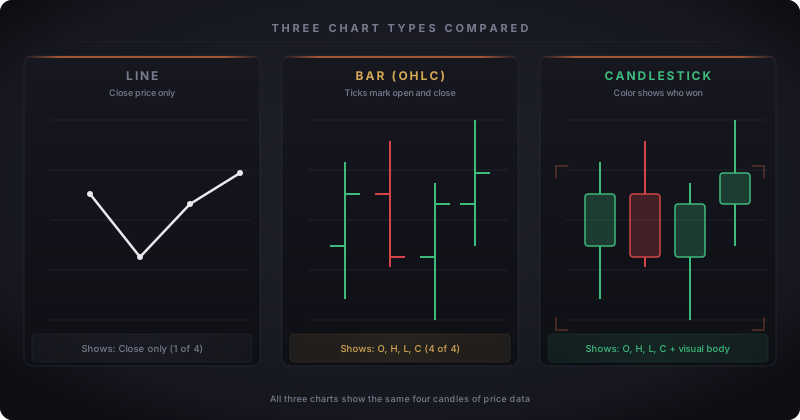
Why Candlestick Charts
This course uses candlesticks because the colored body lets you instantly see who won each period. Green = buyers won. Red = sellers won.
Reading the Story a Single Candle Tells
Three things to look at: the body, the wicks, and the body's position within the range.
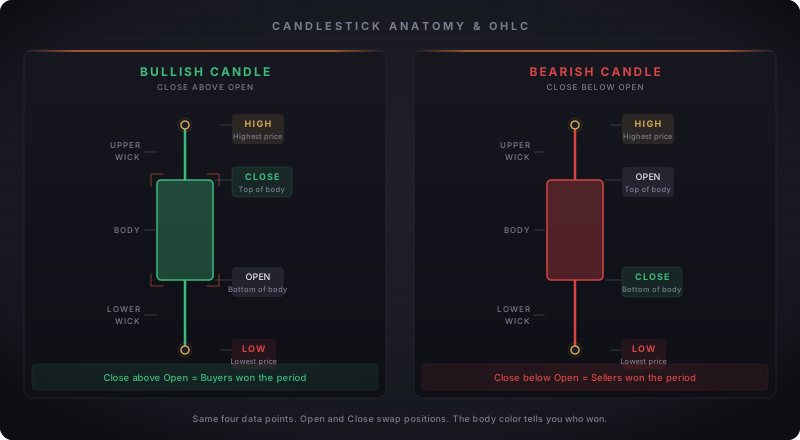
The body is the rectangle between open and close. Tall body = conviction, one side dominated. Small body = indecision.
The wicks are the thin lines above and below the body, showing price range explored but ultimately rejected. Long upper wick = buyers pushed up, sellers drove it back. Long lower wick = sellers pushed down, buyers reclaimed.
The body's position tells you who had the final word. Small body near the top with a long lower wick? Sellers pushed hard but buyers closed near the high. Small body near the bottom with a long upper wick? Buyers tried but sellers slammed it back down.
You can also gauge the intensity of the fight by looking at the body-to-range ratio. If the body fills 80% of the candle's total range (high minus low), one side dominated. If the body fills only 10-20% of the range, both sides swung hard but ended in a near-stalemate.
6,610.00
6,604.00
6,610 - 6,604 = 6.00 points
6,605.00
6,609.50
6,609.50 - 6,605.00 = 4.50 points
4.50 / 6.00 = 75%
A 75% body-to-range ratio means buyers dominated this period convincingly. The wicks are short relative to the body. There was minimal fight from sellers. Compare this to a candle with the same 6-point range but only a 0.50-point body (8% ratio), which would signal heavy two-sided fighting with no clear winner.
Reading Candle Sequences
A single candle tells you who won one round. Sequences tell you who's winning the fight. Watch for three things: body size changes, wick direction shifts, and who keeps winning.
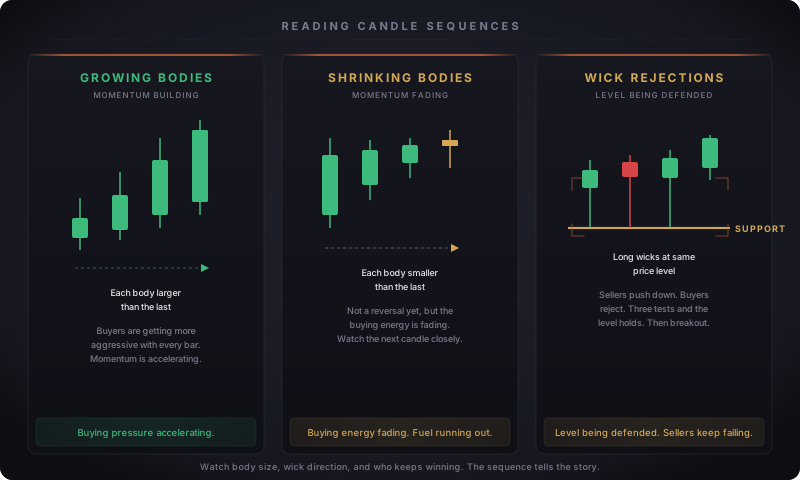
Growing bodies mean momentum is building. Three consecutive green candles with each body larger than the last? Buying pressure is accelerating. The opposite sequence with expanding red bodies signals accelerating selling.
Shrinking bodies mean momentum is fading. A large green candle followed by a smaller green candle followed by an even smaller one? Buyers are running out of energy. The trend isn't reversing yet, but the fuel is drying up.
Wick rejections on consecutive candles tell you a price level is being defended. If three candles in a row all have long lower wicks around the same price, buyers keep stepping in at that level. Sellers are trying to push through, and they keep failing.
Every named pattern (hammer, doji, engulfing) is just shorthand for a specific body-and-wick relationship. Read the logic first. The names follow.
Key Rules
- Every candle answers two questions: Who won? (body color and size) Who tried and failed? (wick length and direction)
- Body-to-range ratio above 70%: one side dominated. Below 30%: neither side won. Calculate it.
- Growing bodies in sequence = accelerating momentum. Shrinking bodies = fading momentum. Watch the trend within the trend.
- Long lower wicks at the same price on consecutive candles = buyers defending that level. Three rejections is a strong signal.
- A 5-minute ES candle with a 4-point range but 0.5-point body means both sides swung hard and nobody won. That's indecision.
- Volume confirms price moves and reveals whether momentum is real (Lesson 8). For now, focus on price structure only.
The next lesson covers timeframes: what changes when you look at the same market on a 1-minute chart versus a 15-minute chart.