What a Timeframe Actually Is
In "Reading a Price Chart" (Lesson 6), you learned how candlesticks compress price data into OHLC bars. A timeframe determines how much time each bar represents.
A 5-minute candle compresses all trades in that window into one OHLC bar. A daily candle does the same for an entire session. The underlying data is identical. The only difference is the aggregation period.
Think of Google Maps: street view shows every pothole, satellite view shows the highway system. Same city, different decisions. A chart timeframe works the same way.
Noise vs Signal: The Trade-Off
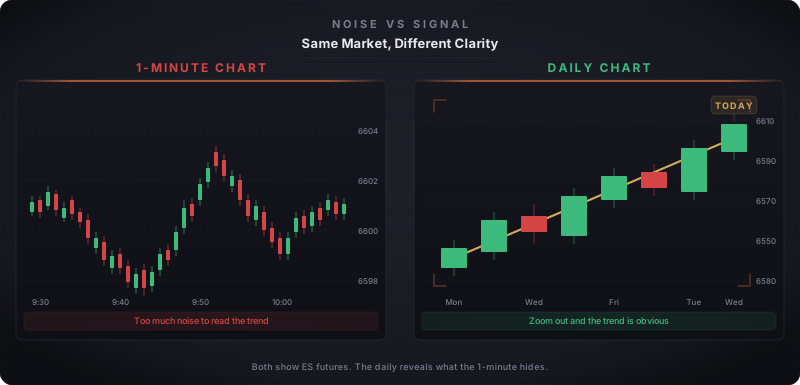
The lower you go, the more noise you see. On a 1-minute chart, small reversals look dramatic and every move feels urgent. Most of those moves are just normal buyer-seller negotiation.
Higher timeframes filter that noise. A 15-minute chart shows clearer directional movement. The trend invisible in 1-minute chaos becomes obvious when you zoom out.
Why Common Timeframes Matter More
The daily, 1-hour, 15-minute, and 5-minute charts are standard in futures trading. That popularity creates an edge.
When thousands of traders watch the same 15-minute chart, they see the same levels and cluster orders there. That concentration makes levels more likely to produce reactions. A level visible only on the 1-minute chart? Far fewer eyes, fewer orders, less likely to hold.
The daily chart matters even if you never hold overnight. The levels visible on the daily are what institutional traders and algorithms are watching. Those participants have the most capital.
Common Timeframes and When to Use Them
Scalping (seconds to minutes): 1-minute and tick charts. Maximum detail, maximum noise. Hardest approach for newer traders.
Day trading (minutes to hours): 5-minute and 15-minute charts. The sweet spot for most futures day traders. Enough detail to time entries, manageable noise.
Swing trading (hours to days): 1-hour, 4-hour, and daily charts. Less intraday detail, more trend clarity.
The trap: checking more timeframes feels like better analysis. You already have a trade idea, the 15-minute doesn't support it, so you scroll through lower timeframes until one shows "confirmation." That's shopping for agreement, not analysis.
Multi-Timeframe Analysis
Use two timeframes: a higher one for direction, a lower one for timing. Pull up the daily chart for directional bias, then drop to the 15-minute for entry spots where price pulls back to support. The daily tells you where. The 15-minute tells you when.
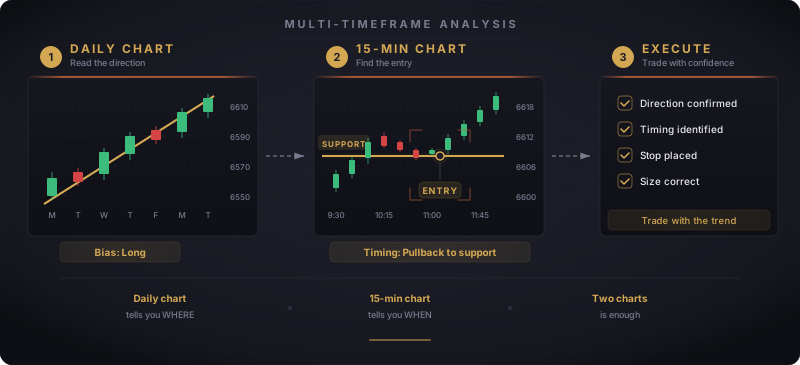
You don't need six monitors running six timeframes. Two is enough for most traders: one higher timeframe for context, one lower timeframe for execution.
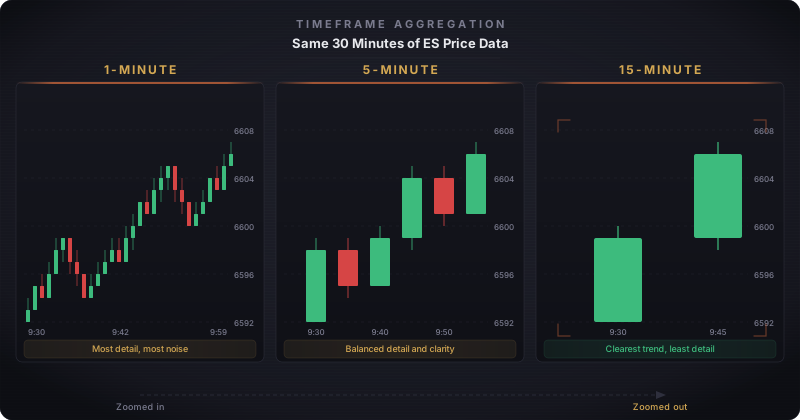
You see choppy back-and-forth action. 14 green candles, 16 red candles. Four small reversals. Feels like the market is directionless. Verdict: confusing, no clear trend.
The first three candles are green with growing bodies. The fourth is a small red pullback. The fifth and sixth are green again. Verdict: uptrend with one pullback.
Two large green candles, both with small wicks. Verdict: clear, strong uptrend with buyer control.
The same 30 minutes told three different stories depending on the lens. The 1-minute chart showed noise. The 5-minute showed a trend with nuance. The 15-minute showed clean directional movement. None were wrong. The question is which one helps you make better trading decisions for your style.
Key Rules
- Your timeframe is chosen before the trade, not during it. Switching charts to find confirmation is rationalization.
- Two timeframes is enough: one higher for direction, one lower for timing. Three is the absolute maximum.
- For ES/NQ day trading, 5-minute or 15-minute as your primary chart. Daily or 1-hour for context.
- Levels on the daily chart matter more than levels on the 1-minute chart because more participants watch them and more orders cluster there.
- The 1-minute chart shows every pothole. The daily chart shows the highway. Match the zoom to your trading style.
The next lesson covers volume, the data layer that tells you how much conviction is behind each price move. Timeframes show you what price did. Volume shows you how seriously to take it.