The 23-Hour Trading Day
If you're coming from stocks, the first thing that'll surprise you about futures is the hours. The NYSE is open for 6.5 hours a day. ES and NQ futures trade for nearly 23.
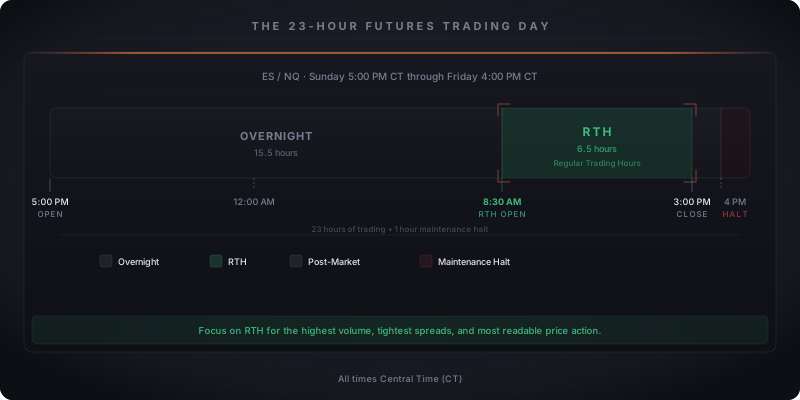
CME Globex opens at 5:00 PM CT on Sunday and runs continuously until 4:00 PM CT on Friday, pausing only for a one-hour daily maintenance halt from 4:00 to 5:00 PM CT. That means price is moving while you sleep, while you eat, and while you're away from your desk.
All CME Globex times are in Central Time (CT). If you're on the East Coast, add one hour. West Coast, subtract two. Most trading platforms let you set your chart timezone to CT, and it's worth doing so every reference you read (including this course) matches your charts.
This near-continuous schedule is one of the reasons futures attract active traders. You're not locked into a narrow window. But here's the misconception that catches almost every new futures trader: more hours available doesn't mean more opportunity.
If you're coming from stocks, the logic seems obvious. The NYSE gives you 6.5 hours. Futures give you 23. That feels like 3.5x more shots at making money. More hours, more setups, more chances to hit your daily target, right?
The math looks right on paper. But it ignores a critical variable: not all hours carry the same quality. Most of those extra hours have thin volume, wide spreads, and price action that doesn't follow the patterns you've studied. Trading those hours doesn't give you more opportunity. It gives you more ways to lose money in low-quality conditions. The 23-hour day is a feature for risk management (you can exit positions during global events) and a trap for undisciplined traders who think they should be watching all the time.
The Three Sessions
Traders break the 23-hour day into three sessions, each with its own personality. Think of it like a restaurant. The brunch rush, the quiet mid-afternoon, and the late-night window all serve food, but the energy, the crowd, and the pace are completely different.
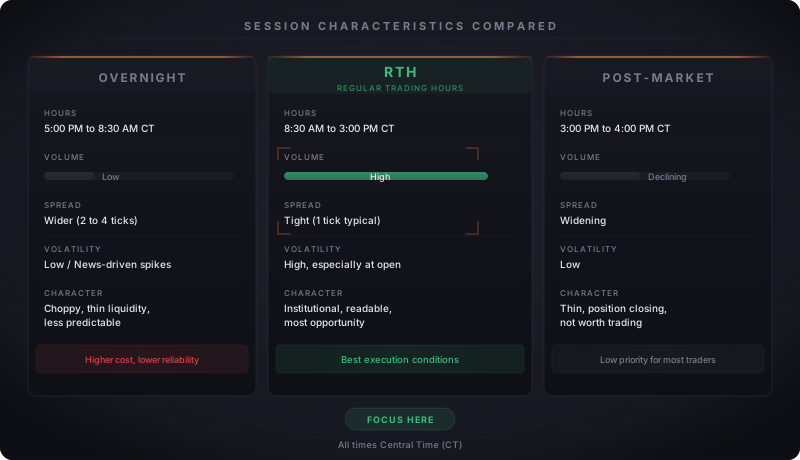
The overnight session (5:00 PM to 8:30 AM CT) feels like trading in an empty building. Price drifts, reacts to headlines out of Asia or Europe, and occasionally snaps 10 points on thin liquidity before settling back. Your limit order fills at a worse price than expected and nobody is around to push price back to where it "should" be.
Regular Trading Hours (RTH) (8:30 AM to 3:00 PM CT) is the main event. The first 60 to 90 minutes feel like a controlled explosion as institutional orders, overnight positioning, and pre-market data all collide. This is where setups behave the way they're supposed to, because enough participants are present to make price action readable.
The post-market session (3:00 PM to 4:00 PM CT) is the wind-down. The energy is gone. Unless you have a specific reason to be in it, this window isn't worth your attention.
The comparison below shows how these sessions differ on the metrics that actually affect your execution: volume, spread, and volatility.
1 tick (0.25 points) = $12.50 per crossing x 2 (entry + exit) = $25.00 per contract round-trip cost
2 ticks (0.50 points) = $25.00 per crossing x 2 (entry + exit) = $50.00 per contract round-trip cost
2x the round-trip cost for the same contract, same trade
~12,000 to 18,000 contracts
~1,000 to 3,000 contracts
The overnight session costs you more per trade (wider spread) and gives you less reliable price action (thinner volume). A setup that looks identical on the chart is fundamentally different depending on when it appears. Session context matters.
In "The Bid, the Ask, and the Spread" (Lesson 5), you learned that the spread is a cost you pay on every trade. This is where that concept becomes directly practical: the spread you pay changes depending on the session you're trading. Overnight, you're paying more to get in and more to get out.
When the Market Actually Moves
Not all hours within a session are equal either. Volume and volatility cluster around specific times of day, and learning those rhythms is part of reading the market.
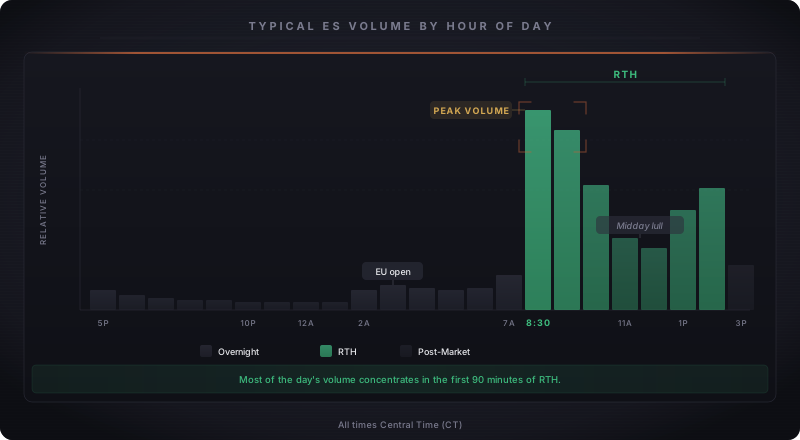
The RTH open (8:30 to 10:00 AM CT) is the highest-energy window. Economic data releases often land at 7:30 AM or 8:30 AM CT, and the first 30 minutes see a rush of institutional order flow. Most of the day's range gets established in this first hour. If you're going to trade one window all day, this is the one most traders choose.
The midday lull (11:00 AM to 1:00 PM CT) is the 3 PM restaurant floor: the lunch rush cleared out, the dinner crowd isn't here yet, and the staff is killing time. Volume drops, ranges compress, and choppy price action is common. Many experienced traders step away during this window entirely. Trying to force trades during the lull is a classic way to give back morning profits.
The afternoon push (1:00 to 3:00 PM CT) brings a second wave of activity. Bond markets close at 2:00 PM CT, and traders position ahead of the 3:00 PM settlement. This creates another opportunity window, though it's usually less volatile than the open.
The midday lull isn't random. Between 11:00 AM and 1:00 PM CT, the morning's institutional orders have mostly been executed, and afternoon catalysts haven't arrived yet. Traders on the East Coast are at lunch. Algorithms that trade on momentum have less movement to react to, so they generate less volume, which creates even less movement.
It's a self-reinforcing quiet period. Smart money is waiting for the 2:00 PM CT bond market close and the final push toward 3:00 PM settlement before committing new capital. If you're forcing trades during this window, you're paying the same spread and commissions for setups with less conviction and tighter ranges. That's a losing math problem.
The European open (roughly 2:00 to 3:00 AM CT) can bring a bump in overnight activity as European traders come online. If you're watching a chart at 3 AM, that's why you might see a pickup in movement. But for most traders, this isn't a session worth building a plan around.
Fridays, Holidays, and Shortened Sessions
The regular weekly schedule is only part of the picture. Several calendar events change how the market behaves, and you need to know about them.
Friday afternoons have a different character than the rest of the week. Traders flatten positions ahead of the weekend, and volume often thins after 1:00 PM CT. Price action can become choppy as participants close exposure rather than opening new trades. Many traders use Friday as a reduced-activity day or stop trading after the morning session entirely.
Monday mornings bring the "overnight gap" from the weekend. Anything that happened between Friday's close and Sunday's open (geopolitical events, natural disasters, weekend policy announcements) shows up as a price gap at Sunday's 5:00 PM open. If you had a stop order in place from Friday (as you learned in "How Orders Actually Work," Lesson 4), a weekend gap can trigger that stop at a price far from where you set it. The first RTH session on Monday absorbs that gap and establishes the week's early direction. Monday opens can be volatile and are worth watching carefully.
Holidays and early closes are more common than you'd expect. The CME Group publishes a holiday calendar that includes early close dates. Before Thanksgiving, for example, equity futures close early (typically 12:15 PM CT), and the Friday after is a shortened session. Good Friday, Christmas Eve, and other holidays follow similar patterns.
Volume drops significantly on these days, even during what would normally be RTH hours. Spreads widen. The market is technically open, but it doesn't behave normally.
Quarterly rollover is another date to track. Futures contracts expire quarterly (March, June, September, December for ES and NQ). Active traders typically roll to the new front-month contract one to two weeks before expiration. During rollover week, volume shifts from the expiring contract to the new one. Your broker or platform will show you the rollover date and the current front-month symbol. If you're in a trade during rollover week, pay attention to which contract you're in and where the volume is concentrating. The mechanics of rollover are covered in more depth in a later module. For now, just know it exists and happens four times a year.
Picking Your Window
You don't need to trade all 23 hours. Most successful futures traders focus on a specific window and trade it consistently.
For new traders, RTH is the only session that matters. The volume is there, the spreads are tight, and the price action is most readable. Trying to trade the overnight session before you're consistently profitable during RTH is adding complexity you don't need yet.
Even within RTH, you don't need to sit through the full 6.5 hours. Many traders focus on the first 90 minutes, take 1 to 3 trades, and call it a day. Others prefer the afternoon session. The key is picking a window, studying its behavior, and building your execution around it. Knowing which session you're in complements your Pre-Execution Protocol (size, stop, bias): check the clock before you check the chart.
Before choosing your trading window, watch each session for at least a week without trading. Note the volume, the spread, and the character of price movement. Your job right now is observation, not execution. Screen time without money on the line teaches you things that no lesson can.
The next lesson covers the economic calendar and news events, because the times that matter most inside your session are often driven by scheduled data releases you can plan for in advance.