What Trading Fear Actually Looks Like
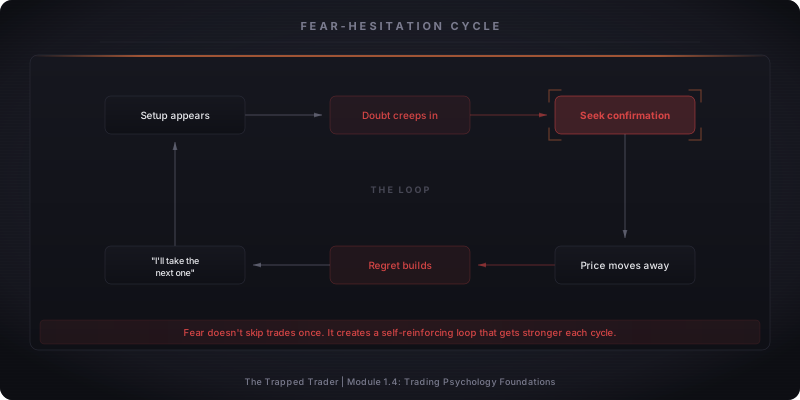
The picture of fear that comes to mind is dramatic: hands shaking, heart pounding, completely frozen. That's rare. For most traders, fear is much quieter. It looks like checking one more timeframe. It sounds like "I'll wait for the next one." It feels like prudence.
I've been through stretches where I'd see valid setups firing exactly as I'd expect and just not take them. Days of this. I always had a reason. "The market feels choppy." Looking back, every one of those stretches traced back to something outside of trading: stress, financial pressure, an argument that morning. Life sneaks into your execution without announcing itself.
Execution anxiety is the tightening at the exact moment you need to act. Analysis done. Plan says go. Something in your chest says wait.
The emotional cycle from Lesson 2 never starts. Anticipation locks up, and you loop back to analysis.
The Confirmation Trap
You check the 5-minute chart and it looks good. You flip to the 15-minute, which confirms. Then you open the 1-hour and notice a resistance level nearby. So you check the daily. By the time you've scrolled through five timeframes, price has moved and the setup is gone.
Preparation happens before the setup appears. Stalling happens after the setup is already there and you're looking for reasons not to act.
The Quiet Cost of Standing Still
Losses show up in your account balance. The trades you never took? Invisible. That invisibility is what makes chronic avoidance so dangerous.
If you're skipping 2-3 valid setups per week, that's 8-12 missed opportunities per month. If your system has positive expectancy, enough of them would have been winners. And the pattern reinforces itself: skip a winner and your brain says "not ready yet." Skip a loser and your brain says "see, I was right." Both feed the avoidance loop. Only execution breaks it.
When Fear Wears a Discipline Costume
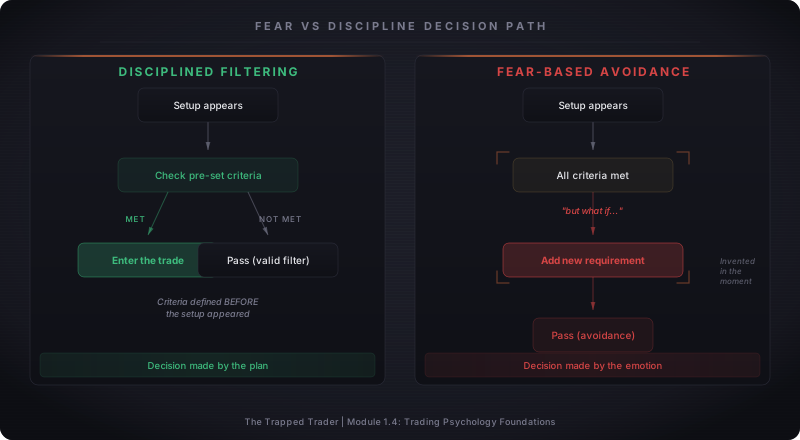
Genuine caution and fear-based avoidance feel identical in the moment. Both produce no trade. The difference is timing.
Disciplined filtering uses criteria established before the setup appeared. Your plan says three conditions. Only two are present. You pass.
Fear-based avoidance adds criteria after the setup is there. All three conditions are met, but now you want a fourth. Those reasons weren't in the plan.
The honest test: could you have articulated your reason for passing before the setup appeared? If no, fear is wearing a discipline costume.
What to Do When You Freeze
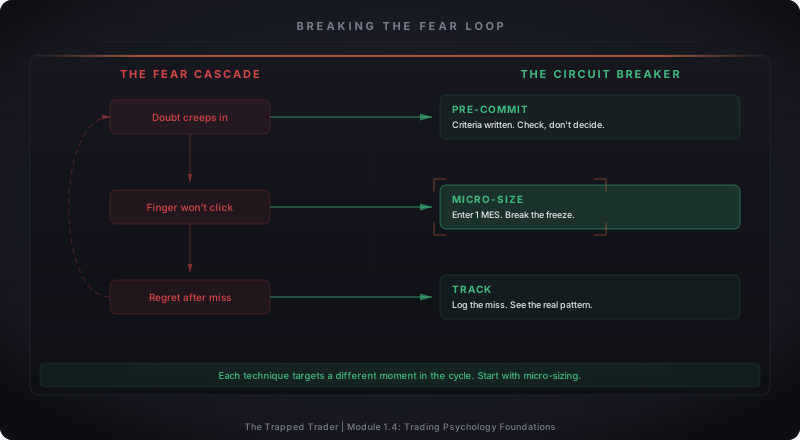
Start here: Micro-sizing. If you can't pull the trigger on a full position, trade one MES contract. You're training the behavior, not the P&L. Five trades at micro size, then scale back up.
Then: Pre-commitment. Write down your exact entry criteria before the session. The Pre-Execution Protocol does this in three checks: verify your position size, confirm your stop placement, check your directional bias. Three yes/no questions replace one terrifying open-ended question.
Then: Track missed trades. Log every setup you pass on: the setup, your reason, and the outcome. Within a month, the data separates legitimate filters from fear-driven excuses.
Key Rules
- When you freeze on a valid setup, drop to 1 MES contract. Execute the behavior. The P&L is irrelevant.
- If you add criteria after a setup appears, that's fear, not filtering. Your criteria were set before the session.
- Log every skipped setup: the entry, your reason for passing, and the outcome. Review weekly.
- After 3 consecutive skipped setups that met your criteria, take the next one at micro size. Break the loop.
- Run the Pre-Execution Protocol as a fear interrupt: size, stop, bias. Three yes/no answers replace one terrifying open question.
- Accept that 40-50% of valid setups will lose. Missing winners costs more than taking planned losses.
Now that you can identify when fear is making your decisions, the next lesson tackles the opposite force: greed, because "just a little more" has ended more winning trades than any stop loss ever will.