What Trading Greed Actually Is
Trading greed isn't wanting to make money. It's the inability to honor your exit plan when a trade is going well. You can want more money and still close at your target. The problem starts when you can't.
Fear paralyzes you at the entry (Lesson 3). Greed paralyzes you at the exit. Both are overrides. Both cost you.
Greed gets its power during The Hold phase from Lesson 2. Unrealized profit grows, and your brain treats that money as already yours. The planned exit at +8 points suddenly feels like giving something away.
I've watched large moves fully retrace after my target was hit. The trade did everything I asked, and I still gave back the profit because I wanted more. A loss you can explain. A winner you gave back haunts you.
The Greed Cycle
Greed follows a predictable pattern. You take a trade. Price moves in your favor. The original target was +8 points on ES, but now you're up 6 and the candles keep printing green. Why close at 8 when it could go to 15? So you move the target.
Price ticks past your original level. Then it stalls. Then it reverses. You hold because it "should" bounce. By the time you close, you're at breakeven. Or worse.
Think of a poker player up $500 at the table. Walking away feels wrong. Three hours later they've given back the $500 and then some. They couldn't leave while they were ahead.
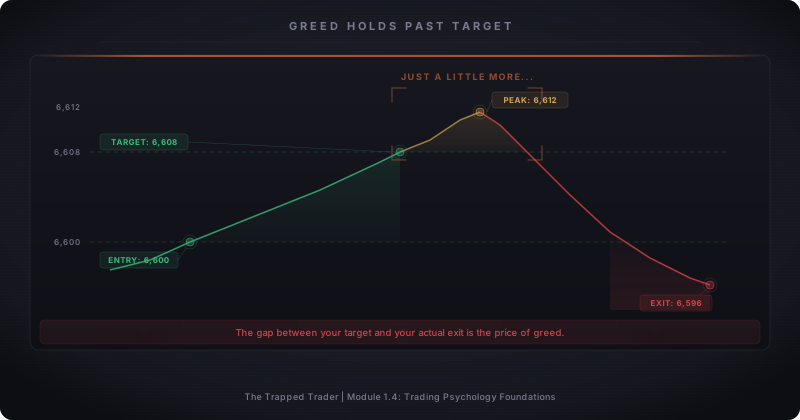
Five stages, all internal before they show up in your P&L:
- The Winner: Trade moves into profit. You feel validated.
- The Euphoria: Unrealized profit grows. Your brain labels this as "your money."
- The Moved Target: You rationalize extending. The reasons feel logical.
- The Reversal: Price turns. You hold because "it'll come back."
- The Regret: You exit worse than your original target.
Step 3 is where it breaks.
The Home Run Trap
The belief that you need big winners to succeed does the most damage. In practice, the trader chasing 20-point winners rarely catches them, and gives back planned profits trying.
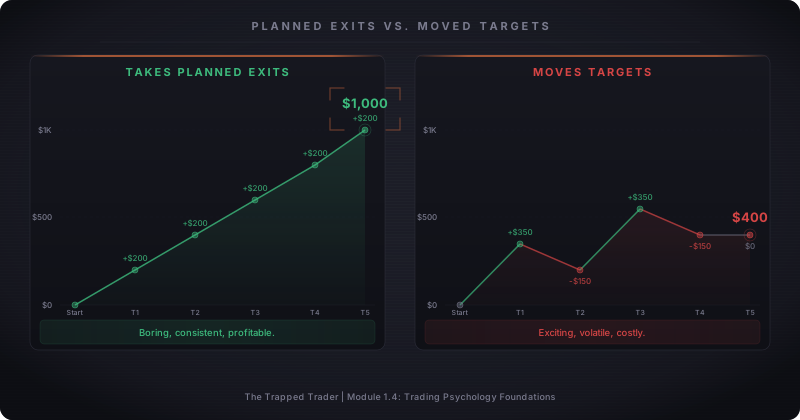
5 trades x $200 = $1,000
2 trades reach +$350 (partial, not the full target) = $700 1 trade stalls and exits breakeven = $0 2 trades reverse past entry = -$300
Trader A: $1,000. Trader B: $400. Same five entries. Trader A made 2.5x more by doing the boring thing: honoring planned exits. And Trader A's equity curve was smoother, which means less emotional damage and less temptation to revenge trade after a reversal.
If your strategy says "trail the stop after reaching 1R profit," that's a plan. If you move the target because the candles look good, that's greed.
Pre-Committing to Your Exit
Pre-commitment solves this where willpower won't. Set the target before the trade, when you're thinking clearly, and honor it regardless of how the trade feels once you're in it.
1. Write the exit in your plan. Before every trade, write your entry, stop, and target. Not "around 6,608." Exactly 6,608. Vague targets invite mid-trade negotiation.
2. Set the order, then step back. Place your limit exit order at your target the moment your entry fills. Let the platform close the trade.
3. Review moved targets weekly. Calculate what your P&L would have been at each original exit. The number makes the pattern undeniable.
Define your exit before you enter. Write the target and the stop in your playbook setup. UpSkalr tracks whether you followed your planned exit on every trade.
Key Rules
- Write your exact profit target before entry. Not "around" a number. A specific price.
- Place your limit exit order the moment your entry fills. Let the platform close the trade for you.
- When you feel the urge to hold past target, that's greed, not analysis. Close the trade.
- Review moved targets weekly. Calculate the P&L difference between planned exits and actual exits. Track over at least 20 trades before drawing conclusions.
- If your plan says "exit at target," switching to a trail mid-trade is a rule break. Build trailing into the plan before entry, or don't use it.
- 5 planned $200 exits outperform 5 home-run attempts. Consistency compounds.
Next up is the third member of the emotional trinity: FOMO, the trade you chased. If fear stops you from acting and greed stops you from exiting, FOMO makes you act when there's nothing to act on.