Why Routines Work (and Motivation Doesn't)
Discipline depletes. The more decisions you make, the worse subsequent ones become. A pre-trade routine front-loads the important decisions before the market opens. You decide your bias, your risk, and your readiness BEFORE the chart starts moving.
Think of a pilot's pre-flight checklist. Pilots don't check the fuel because they might forget how to fly. The act of checking puts their brain into operational mode.
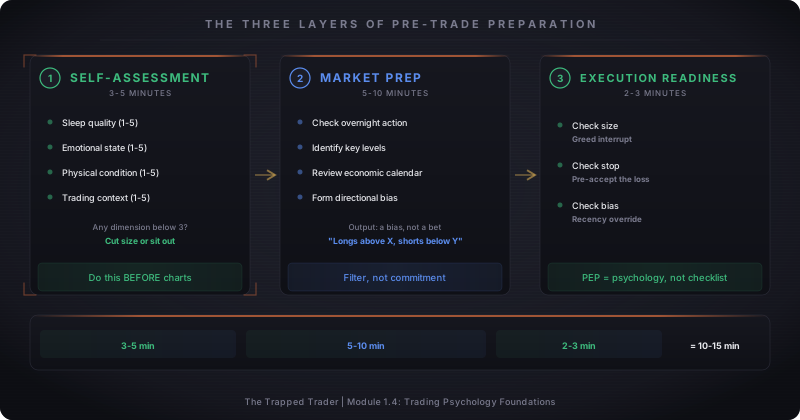
Most traders default to checking charts before they trade. That's market preparation, and it's only one-third of the job. The routine that prevents blowup days addresses three layers: what the market is doing, how YOU are doing, and what your execution rules are.
The Three Layers of Pre-Trade Preparation
Three layers, in order. The order matters.
Layer 1: Self-Assessment (3-5 minutes)
Before you look at a single chart: am I fit to trade today? Sleep quality. Stress level. Emotional state. Physical condition.
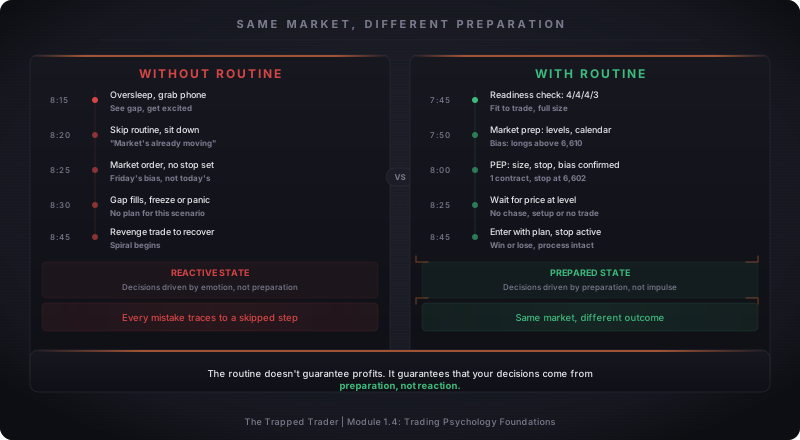
In the fear lesson (Lesson 3), I mentioned stretches where I'd see valid setups and just not take them. Every one traced back to something outside of trading. If I'd spent 90 seconds rating my emotional state before opening the platform, I would have seen a 3. A 3 means cut size or sit out.
If you check the chart first, the market contaminates your self-rating. ES gapping up 15 points makes you feel "great" because you're excited. That's the emotional cycle starting early, not readiness.
Layer 2: Market Preparation (5-10 minutes)
Check overnight price action. Identify key levels. Note economic releases. Form a bias: "Longs above 6,610, shorts below 6,590." A filter, not a commitment.
Layer 3: Execution Readiness (2-3 minutes)
The Pre-Execution Protocol (check size, check stop, check bias) returns from a psychological angle.
"Check size" is a greed interrupt. Confirming your position size forces your brain to process the dollar amount at risk.
"Check stop" is pre-acceptance of the loss. If the worst case feels unbearable, you're too big or too emotional.
"Check bias" is a recency override: "Is my bias from the chart, or from my last trade?"
Some mornings self-assessment takes 60 seconds. Others take 5 minutes because something is off.
What Happens Without the Routine
The Readiness Check
Rate yourself 1 (compromised) to 10 (sharp) on seven dimensions before every session:
- Sleep: Am I alert?
- Emotional state: Am I carrying anger, anxiety, or excitement from outside trading?
- Physical state: Hungry? Over-caffeinated? Physical discomfort creates impatience.
- Trading context: Coming off a losing streak (revenge risk) or a winning streak (overconfidence risk)?
- Confidence: How strong is my conviction in today's plan? Low confidence leads to hesitation and missed entries.
- Stress: How much emotional load am I carrying? High stress distorts risk assessment.
- Focus: How sharp is my attention? Low focus leads to impulsive trades and missed signals.
Any dimension below a 5: half size or sit out. The confidence, stress, and focus dimensions match what you track in your journal (Lesson 8). Your pre-trade scores become the first data point in today's journal entry.
Whether you run this check on paper or in UpSkalr's pre-trade modal, the habit matters more than the tool.
Making It Stick
Anchor it to an existing habit. "After I pour my coffee, I open my journal and do my readiness check."
Keep it under 15 minutes. A 45-minute pre-trade ritual is a hobby. Most traders abandon elaborate routines within two weeks.
Write it down physically. Printed checklist next to your monitor. Physical paper creates commitment that digital checklists don't.
Key Rules
- Complete all 3 layers (self-assessment, market prep, execution readiness) before every session. No skipping layers.
- Do self-assessment first, before looking at any chart. The chart contaminates your self-rating.
- Rate yourself 1-10 on seven dimensions: sleep, emotional state, physical state, trading context, confidence, stress, and focus. Any score below 5 means half size or sit out.
- Keep your total routine under 15 minutes. Elaborate 45-minute rituals get abandoned within 2 weeks.
- Anchor the routine to an existing habit: "After I pour my coffee, I open my journal."
- Print the checklist. Paper on your desk beats a tab you'll never open.
In the next lesson, you'll learn about identity-based trading: the shift from trying to be disciplined to becoming a disciplined trader. Your pre-trade routine is the first identity signal. When you do it even on days you don't want to, you're telling your brain "I'm the kind of trader who prepares."