Two Points Don't Make a Trendline
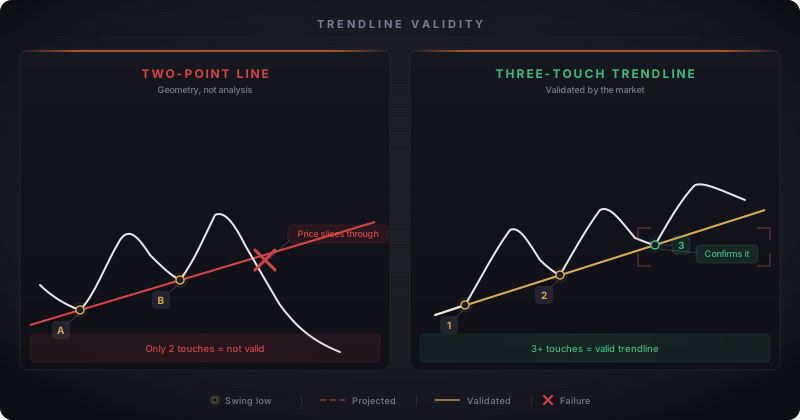
Two points ALWAYS make a line. That doesn't mean the market cares about it. A trendline only becomes meaningful after a third touch, where price returns and bounces. Think of a footpath through a field: two people walk a similar route, maybe coincidence. A third and fourth person follow the same path, and you've got a real trail.
Drawing Trendlines That Mean Something
Ascending trendline: connect at least three swing lows (points where price dropped, reversed, and moved higher). Pass through either candle bodies or wick tips, but stay consistent. Mixing creates a fuzzy line. Descending trendline: connect at least three swing highs. Same rules.
Neither bodies nor wicks is objectively better. Bodies give a tighter line showing where most traders settled. Wicks capture the extremes. Some traders draw both and use the space as a zone, similar to treating S/R as zones in Lesson 2. The key is consistency within each trendline.
Channels: Trading Between Two Lines
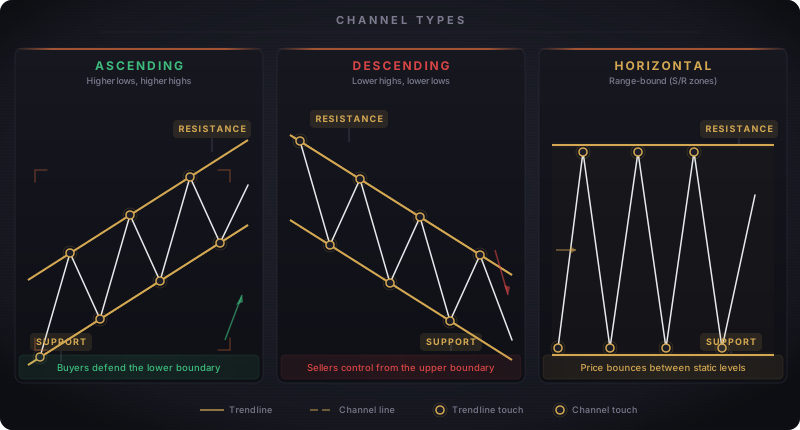
A channel appears when price respects both a trendline AND a parallel line on the opposite side.
Ascending channel: higher lows along the trendline, higher highs along the channel line. Buyers step in at the trendline, sellers at the channel line.
Descending channel: lower highs along the trendline, lower lows along the channel line. Sellers control direction.
Horizontal channel: flat lines. This is what most people call a range, the same S/R zone concept from Lesson 2 framed with parallel lines.
From Lesson 2: each bounce adds credibility, but each test absorbs orders. After enough tests, the boundary weakens.
When Trendlines Bend vs When They Break
Not every violation is a break. The difference comes down to the close.
A wick through a trendline that closes back on the correct side is a false break. It actually confirms the line: demand is still present, even when price briefly traded through it.
A real break is a candle that closes on the wrong side. A close below an ascending trendline means the buyer/seller balance has shifted.
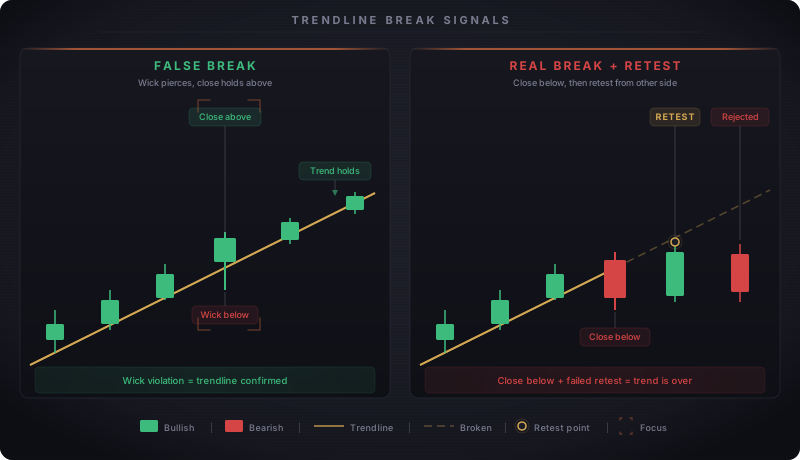
Broken trendlines often get retested: price breaks below, pulls back to the line from the other side, then continues lower. That retest confirms the old trendline is now acting as resistance, the same S/R flip from Lesson 2 applied to a diagonal level.
Watch for bending too. Sometimes a trend decelerates instead of breaking cleanly: the angle flattens, touches get further apart, and price spends more time near the line instead of bouncing sharply. Bending often precedes a break, but bending isn't breaking. Deceleration means traders are stepping back, not reversing.
Trendlines as Context
A trendline IS a key level, just diagonal. A candlestick pattern at a trendline is context stacking: the pattern shows a pressure shift, the trendline shows WHERE it happened. Together, they form a higher-confidence read.
When a trendline crosses a horizontal S/R level, you've got a confluence zone: two independent pieces of evidence pointing to the same price. These spots carry the highest reaction probability because two separate groups of orders are clustered at the same price.
Key Rules
- A trendline needs minimum 3 touch points. Two points is geometry. Three is analysis.
- Pick one connection method (bodies or wicks) and stay consistent across the entire trendline. Mixing creates a meaningless line.
- If you have to skip a swing point to make the line fit, the trendline is not valid. Walk away.
- A wick through a trendline with a close back on the correct side is a false break that confirms the line. Do not panic-exit on wicks.
- A candle that closes on the wrong side of the trendline is a real break. That changes your bias.
- After 5+ touches, the trendline is well-established but also weakened by order absorption. Treat the 6th test with less confidence than the 3rd.
- When a trendline and horizontal S/R level converge at the same price, you have confluence. Those zones carry the highest reaction probability.
Now that you can draw trendlines and identify channels, the next lesson covers trend structure: the pattern of higher highs and higher lows (or lower highs and lower lows) that defines whether a trend is intact. Trendlines show you the angle. Trend structure shows you the skeleton underneath.