You find a textbook bullish flag on the 15-minute chart. You enter long. Thirty minutes later, you're stopped out because the daily chart was in a downtrend and you never checked. This lesson ties everything together into a top-down workflow you can repeat before every trade.
If the daily chart is in a downtrend, that 5-minute bullish flag is swimming upstream. The pattern isn't wrong. It's irrelevant. The higher timeframe answers "which direction?" The lower timeframe answers "where do I enter?"
The misconception is thinking the lower timeframe is more accurate because it shows more detail. At lower timeframes, the noise-to-signal ratio explodes. On the other end, six charts open means six opinions and six chances for confirmation bias. Two timeframes is enough. Three at most.
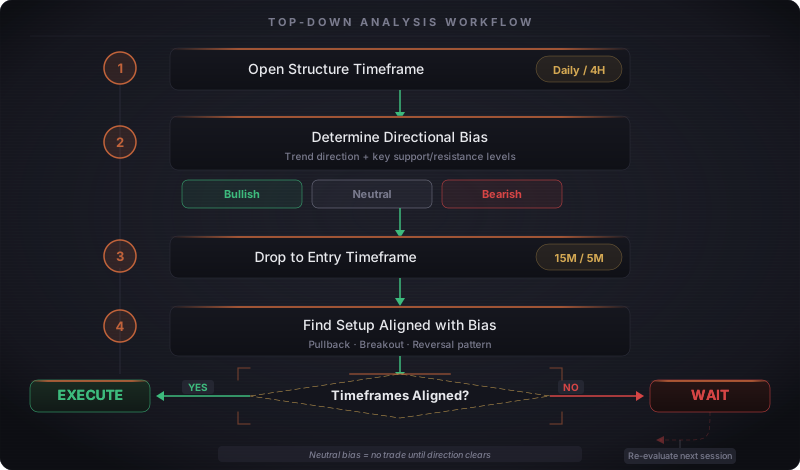
The Top-Down Workflow
Always start with the higher timeframe. Determine directional bias first, then drop down for entries that align. If you open the 5-minute first and then check the daily for "confirmation," you'll see what you want to see instead of what's actually happening.
Your structure timeframe (daily or 4-hour) answers: which direction? Higher highs and higher lows (Lesson 4)? At a key support or resistance level (Lesson 2)? Ranging? The answer is your bias: bullish, bearish, or neutral.
Your entry timeframe (15-minute or 5-minute) finds specific setups: a pullback to a flipped level (Lesson 9), a breakout with volume (Lesson 8), or a reversal pattern at a key zone (Lesson 6). The setup must point the same direction as your structure timeframe bias.
What Alignment Looks Like
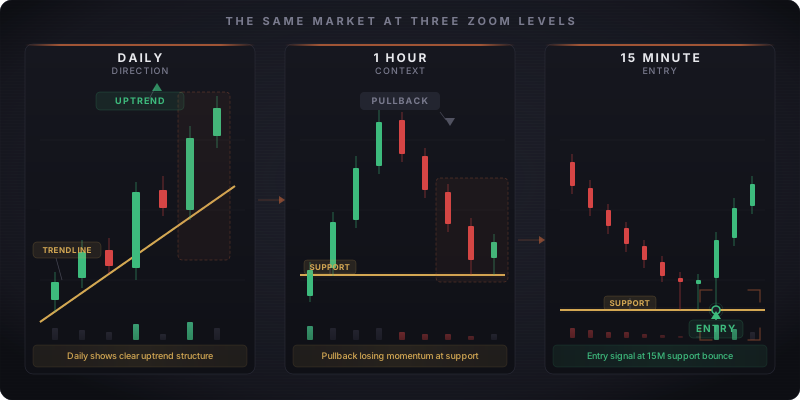
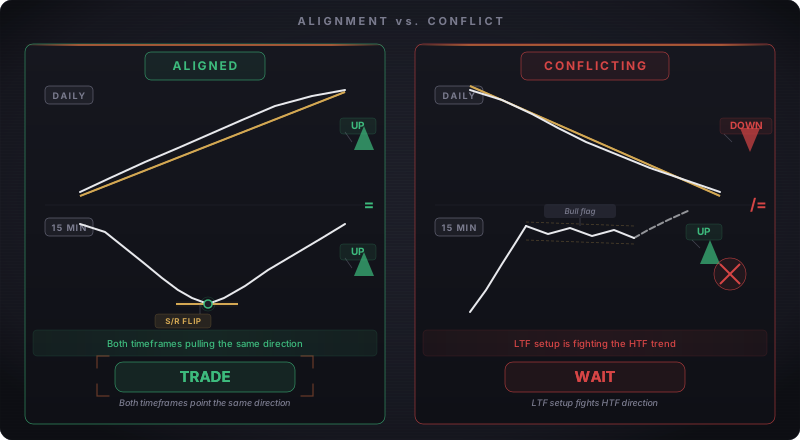
Alignment means both timeframes point the same direction. The daily shows higher highs, higher lows, price above the 50-period moving average (Lesson 7). Bias is bullish. The 15-minute shows a pullback to a flipped level with corrective candles and declining volume (Lesson 9). That's alignment.
All three timeframes telling the same story at different resolutions. That's the setup you're waiting for.
When Timeframes Conflict
The hardest part is walking away from lower timeframe setups that fight the higher timeframe trend. A bullish flag on the 15-minute means nothing if the daily is making lower highs. Without directional support from the higher timeframe, patterns are missing the one ingredient that shifts odds in your favor.
The Pre-Execution Protocol's "check bias" step means check the structure timeframe, not your gut. If the LTF setup doesn't match: no trade.
Over a hundred trades, acting only when timeframes align produces better results than forcing trades when they disagree. Consistency comes from repeating a process, not chasing every opportunity.
Key Rules
Always start on the higher timeframe. Daily or 4-hour sets direction. 15-minute or 5-minute sets the entry. Never reverse this order.
Two timeframes is enough. Three at most. Each additional timeframe adds noise, not clarity.
If the entry timeframe setup conflicts with the structure timeframe bias, the answer is no trade. Full stop.
Never open the lower timeframe first. Starting low and "confirming" high backwards engineers the bias you want.
A perfect LTF setup against the HTF trend is a trap, not an opportunity. The probabilities are against you.
Set your bias before the session opens, at least 15 minutes before your first trade: bullish, bearish, or neutral. If neutral, only take trades that emerge from resolved ranges, not anticipation.
Reading price action and trading profitably are not the same thing. In Module 1.3: Risk Management Essentials, you'll learn position sizing, stop placement, the 1% rule, and drawdown math. For a preview, read Position Sizing for Futures Traders. Knowing where to enter means nothing if you don't know how much to risk.
01Test
You've finished reading. Time to check what landed.
Check Your Understanding
1 / 5
1.What is the primary purpose of checking the higher timeframe BEFORE looking at the lower timeframe?
02Practice
Knowing isn't enough. Put it into practice.
Practice Exercise
Plan Writing·~20 min
Write your personal multi-timeframe analysis checklist that you'll follow before every trade. Use the top-down workflow from this lesson as your foundation, but customize it to your situation. Your checklist should include:
1. Your chosen structure timeframe (and why you chose it)
2. Your chosen entry timeframe (and why you chose it)
3. How you determine bias on the structure timeframe (which tools from Lessons 2, 4, and 7 you use)
4. What specific setups you look for on the entry timeframe (reference Lessons 5-6, 8, or 9)
5. Your alignment check: how you confirm the LTF setup agrees with HTF bias
6. Your no-trade conditions: at least 2 situations where you sit out regardless of how good the LTF setup looks
Reference your trendline analysis from Lesson 3, your support/resistance zones from Lesson 2, and your annotated charts from Lessons 1, 5, and 9 as you build your multi-timeframe workflow.
After writing the checklist, test it against 2 historical chart examples (any market, any date). For each example, walk through every step and note what the checklist told you to do.
03Reflect
Before you move on, anchor these ideas.
—Module Complete
You've finished every lesson in Reading Price Action. Ready to test the full picture?