What a Breakout Actually Is
A breakout happens when price moves decisively beyond a level that previously contained it. A wick poking through resistance by two ticks isn't a breakout. A candle that briefly trades above but closes below isn't either. Those are tests.
Think of breakouts like fire alarms. Most fire alarms are false alarms. Experienced building managers check for actual smoke before reacting. Price crossing a level is the alarm. The smoke is the confirmation: volume, close position, and the retest. No smoke, no fire.
The Fakeout: Why Most Breakouts Fail
Why so often? A small cluster of stop loss orders above resistance triggers a cascade: stops fire as buy orders, those buys push price higher, and it looks like a breakout. But once those stops are filled, no new buyers sustain the move. Price stalls and drops back below. That's survivorship bias at work: on historical charts, big moves always started with a breakout, but you're forgetting the dozens that failed.
Volume: The Breakout's Lie Detector
A real breakout has participation. Sellers defending the level have given up. New buyers are flooding in. You see this as a volume spike on the break candle, clearly above the recent average.
A fakeout has the opposite signature. Price crosses the level, but volume stays flat or drops. Almost nobody is participating.
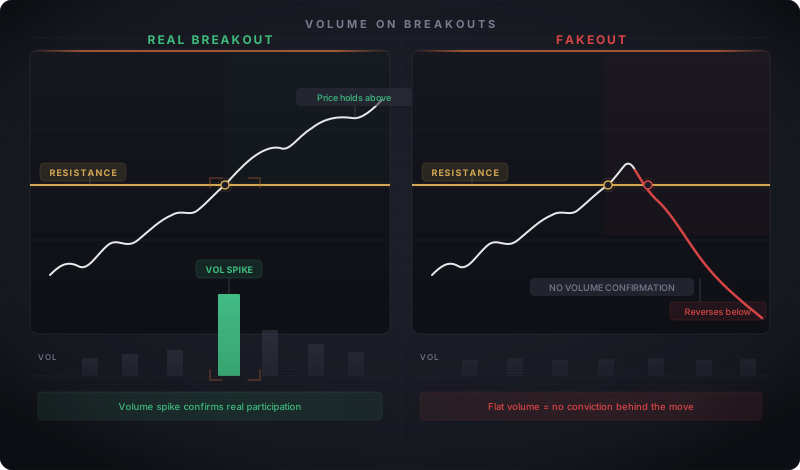
Volume isn't a guarantee. But combining it with candle close position dramatically improves your filter.
The Retest: Your Second Chance
You don't have to enter on the breakout itself. After a real breakout, price often pulls back to the level it just broke through. The support-resistance flip from Lesson 2: former resistance becomes the new floor. That pullback is a retest.
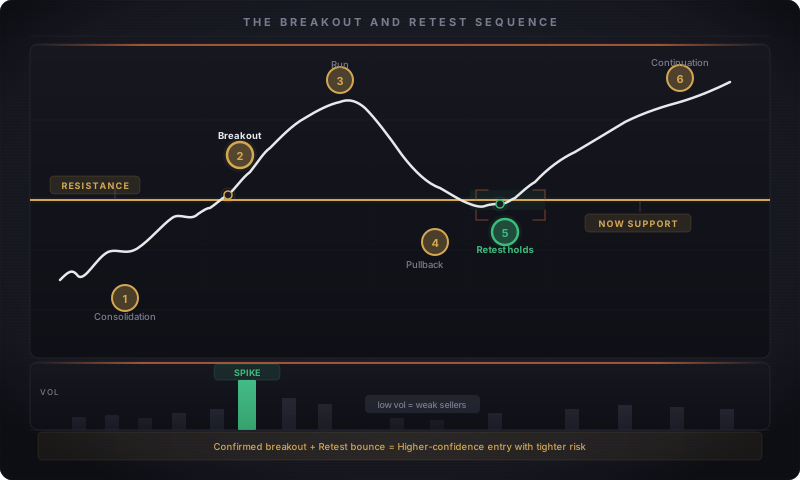
The retest is safer for three reasons: you've already seen confirmation, your stop placement is tighter (just below the retested level), and if it fails, you're out with a small loss instead of the bigger one from chasing.
You enter ES long at 6430 as price breaks resistance at 6425. Your stop goes below the range at 6420. Risk = 10 points x $50/point = $500 per contract.
You wait. Price pulls back to 6426, bounces off old resistance (now support), and you enter. Your stop goes just below the level at 6423. Risk = 3 points x $50/point = $150 per contract.
Target for both: 6445. Breakout entry reward = 15 points ($750). Retest entry reward = 19 points ($950).
The breakout entry risks $500 to make $750 (1.5:1 risk-to-reward). The retest entry risks $150 to make $950 (6.3:1 risk-to-reward). Same trade idea, same target, same contract. The only difference is patience.
Putting It Together: When to Trade a Breakout
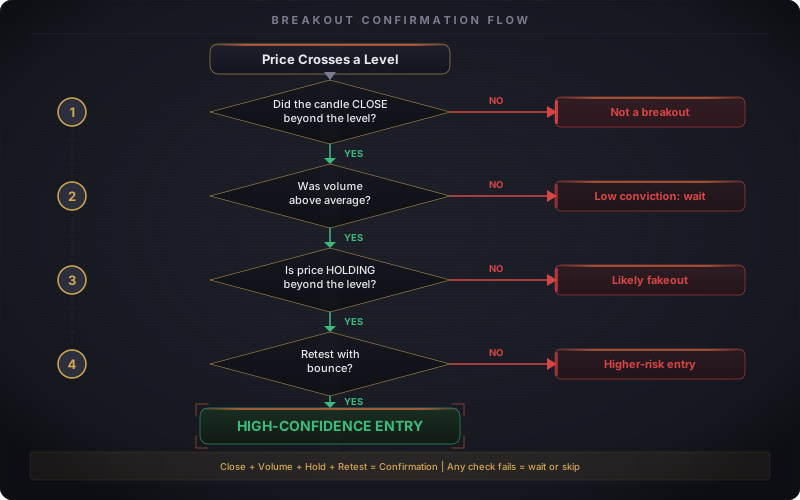
Step 1: Did the candle close beyond the level? Wick only? Not a breakout.
Step 2: Was volume above average? Compare to recent candles in the same session.
Step 3: Is price holding? Watch the next 2-3 candles. If they close beyond the level, control is maintained.
Step 4: Is there a retest? Pullback on light volume that bounces? Cleanest entry. Pullback punches back through? Failed breakout.
Not every breakout gives you all four. The retest is your highest-confidence entry, and if it doesn't come, the market wasn't offering you this trade. Read more in The Waiting Game: Trade Without Second-Guessing.
Key Rules
- A breakout is not confirmed until a candle closes beyond the level. Wicks through the level are tests, not breaks.
- Compare breakout volume to the prior 10-candle average. Below-average volume on the break is a fakeout warning.
- If you missed the breakout and there's no retest, there's no trade. Chasing is how you become the trapped trader.
- Wait for 2-3 candles after the break to hold beyond the level before treating it as confirmed.
- The retest entry gives you 3-5x better risk-to-reward than chasing the initial break. Patience pays.
- If price immediately reverses through the level after breaking it, exit. A breakout trade is a momentum bet. No momentum means no trade.
Now that you can tell when a breakout is real versus a trap, the next lesson covers what happens after the break: pullbacks and retests in more depth, including how to size entries on retests and where things go wrong when the pullback extends further than expected.